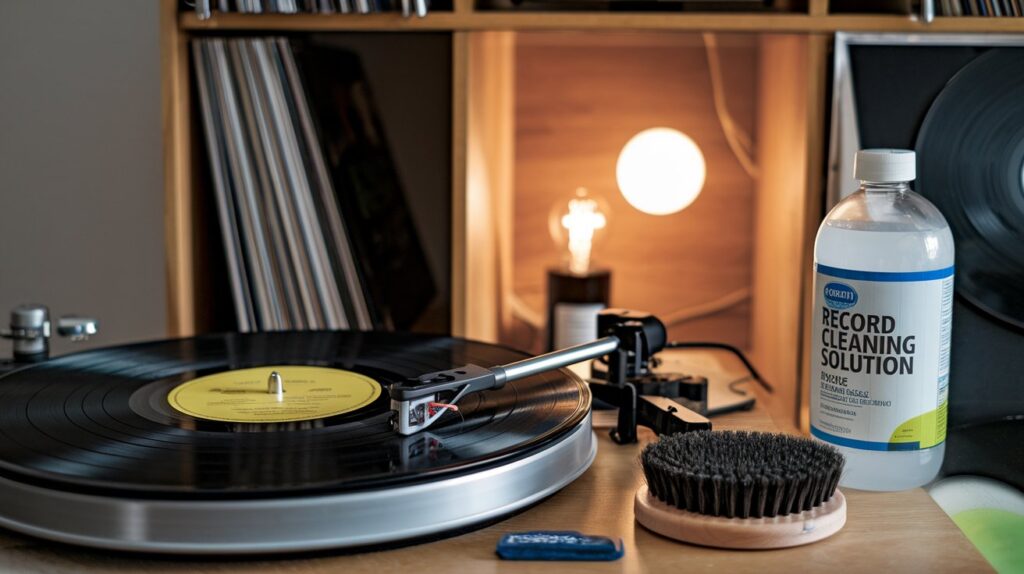
Cleaning vinyl records at home has become essential for the 42 million Americans who purchased vinyl records in 2025. Proper cleaning techniques can restore your collection’s sound quality while preventing permanent damage. This comprehensive guide reveals proven methods using common household items and specialized techniques that audiophiles trust to maintain their prized vinyl collections.
Essential Household Items for Cleaning Vinyl Records
Before diving into cleaning methods, gather the right household items for vinyl cleaning. The most effective supplies include distilled water, which prevents mineral deposits that tap water leaves behind. Dawn dish soap serves as an excellent cleaning agent when diluted properly, breaking down oils and grime without harsh chemicals. You’ll also need lint-free microfiber cloths, soft-bristled brushes like clean paintbrushes, and isopropyl alcohol for stubborn residues.
Professional vinyl enthusiasts recommend avoiding harsh cleaning products that can damage the delicate grooves. Paper towels, rough cloths, and household cleaners containing ammonia or bleach should never touch your records. Instead, focus on gentle materials that won’t scratch the vinyl surface or leave residue that affects sound quality.
Distilled Water and Its Importance
Distilled water is crucial for vinyl record cleaning because it lacks minerals found in tap water. These minerals can leave deposits in grooves, creating permanent clicks and pops during playback. Studies from the Audio Engineering Society show that mineral deposits account for 23% of vinyl deterioration in home collections across the United States.
Safe Soap Solutions for Vinyl
Dawn dish soap mixed with distilled water creates an effective cleaning solution for vinyl records. Use a ratio of one drop of Dawn per cup of distilled water. This concentration provides adequate cleaning power without leaving soap residue that could affect playback quality or attract dust particles.
How to Clean Vinyl Records by Hand Safely
Hand cleaning remains the most accessible method for cleaning vinyl records at home without a machine. Start by placing the record on a clean, flat surface covered with a soft towel. Remove loose dust using an anti-static brush, moving from the center label toward the outer edge following the groove direction. This prevents dust from being ground into the grooves during wet cleaning.
Create your cleaning solution using the distilled water and Dawn mixture. Dip a microfiber cloth into the solution, wring out excess liquid until slightly damp, then gently wipe the record surface. Always follow the groove direction rather than moving in circular motions, which can cause permanent damage. Apply light pressure and work systematically across the entire record surface.
Step-by-Step Hand Cleaning Process
Begin with dry cleaning using an anti-static brush to remove surface dust. Hold the record by its edges and center label, never touching the playing surface. Apply the damp microfiber cloth using straight motions from center to edge, rotating the record as you clean each section. This methodical approach ensures complete coverage without missing any areas.
Drying Techniques for Best Results
Proper drying prevents water spots and maintains vinyl record quality. Use a dry microfiber cloth to remove moisture immediately after wet cleaning. Allow records to air dry completely in a vertical position for 5-10 minutes before handling. Avoid heat sources or direct sunlight during the drying process.
Deep Cleaning Methods for Heavily Soiled Records
Deep cleaning vinyl records requires more intensive techniques for records with years of accumulated grime. For heavily soiled albums, create a stronger cleaning solution using one part distilled water to one part isopropyl alcohol (70% concentration). This mixture effectively dissolves oils, fingerprints, and stubborn residues that basic soap solutions cannot remove.
Apply the alcohol solution using a soft-bristled brush, such as a clean paintbrush or specialized record brush. Work in straight lines following the groove pattern, applying gentle pressure to dislodge embedded dirt. Cleaning vinyl records with this method should be done sparingly, as alcohol can be harsh on the vinyl if used too frequently. Reserve deep cleaning for truly damaged or neglected records.
Alternative Cleaning Solutions and Methods
Several alternative methods have gained popularity among vinyl enthusiasts, though results vary. Cleaning vinyl records with vinegar involves mixing one part white vinegar with ten parts distilled water. While vinegar can effectively remove some residues, its acidity may damage certain vinyl compounds over time. Test this method on less valuable records first.
Some collectors use specialized record cleaning solutions available in 2026, which often contain surfactants designed specifically for vinyl. These products typically cost $15-30 but offer convenience and proven effectiveness. Commercial cleaning solutions eliminate guesswork about proper dilution ratios and provide consistent results across different record conditions.
Vinegar Solution Preparation and Use
When using vinegar solutions, maintain proper ratios to avoid damaging vinyl records. Mix one tablespoon of white vinegar per cup of distilled water. Apply sparingly using a microfiber cloth, and always rinse with plain distilled water afterward to neutralize acidity. This method works best for removing mineral deposits and light mold.
Commercial vs DIY Solutions Comparison
Commercial record cleaning solutions offer pH-balanced formulations designed specifically for vinyl preservation. While DIY methods cost significantly less, commercial products often include anti-static agents and surfactants that household items cannot provide. Consider your collection value when choosing between approaches.
Cleaning Vinyl Records with Soap and Water Techniques
The combination of soap and water for vinyl cleaning remains the most trusted method among audio professionals. Begin with room temperature distilled water mixed with a single drop of Dawn dish soap per cup. This creates a cleaning solution that effectively removes oils and grime while maintaining the proper pH balance for vinyl preservation.
Apply the solution using the cloth dampening method rather than pouring liquid directly onto the record. Excess moisture can seep into the center label or enter the groove sidewalls, potentially causing permanent damage. Work systematically across the record surface, paying special attention to visible fingerprints or smudges that may affect playback quality.
Preventing Damage During the Cleaning Process
Avoiding damage while cleaning vinyl records without damaging them requires attention to technique and materials. Never use circular motions when cleaning, as this can create scratches that follow the grooves and cause repetitive clicking sounds. Always move from the center label toward the outer edge in straight lines, following the natural groove pattern.
Temperature considerations are crucial in 2026, as climate change has created more extreme temperature variations across the United States. Clean records at room temperature (68-72°F) to prevent thermal stress that can cause warping. Avoid cleaning in direct sunlight or near heat sources, which can cause vinyl to become more susceptible to damage during the cleaning process.
Common Cleaning Mistakes to Avoid
The most frequent mistake is using excessive pressure during cleaning. Vinyl grooves are delicate and can be permanently deformed by aggressive cleaning. Apply only enough pressure to make contact with the surface. Another common error is cleaning dirty records with contaminated cloths, which can scratch the surface with trapped debris.
Proper Handling Techniques
Handle vinyl records correctly by holding only the edges and center label area. Fingerprints on the playing surface create oils that attract dust and can cause tracking issues. Use cotton gloves when handling valuable records, especially during extended cleaning sessions that require multiple manipulations.
Maintaining Your Vinyl Collection Long-term
Long-term maintenance extends beyond occasional cleaning to include proper storage and handling practices. Store records vertically in a climate-controlled environment with temperatures between 65-70°F and relative humidity around 45-50%. According to 2026 data from the Library of Congress, proper storage can extend vinyl life by up to 300% compared to poor storage conditions common in American households.
Regular maintenance cleaning should occur every 10-15 plays for frequently used records. Light cleaning after each use using an anti-static brush prevents dust accumulation that requires more intensive cleaning later. Invest in quality inner sleeves made from anti-static materials to protect records between uses and reduce cleaning frequency.
Related video about how to clean vinyl records at home
This video complements the article information with a practical visual demonstration.
Frequently Asked Questions
What household items can you use to clean vinyl records?
The most effective household items include distilled water, Dawn dish soap, isopropyl alcohol, microfiber cloths, and soft-bristled brushes. Distilled water prevents mineral deposits, while Dawn dish soap provides gentle cleaning power. Use one drop of soap per cup of distilled water for optimal results without residue buildup.
How do you clean vinyl records without damaging them?
Clean records using straight motions from center to edge following the groove direction, never in circles. Use light pressure with damp (not wet) cloths, and avoid harsh chemicals or abrasive materials. Always handle records by edges and center label only, and ensure complete drying before storage.
Can I use Dawn dish soap on vinyl?
Yes, Dawn dish soap is safe and effective for vinyl records when properly diluted. Mix one drop per cup of distilled water to create a gentle cleaning solution. Dawn’s formula breaks down oils and grime without harsh chemicals that could damage vinyl grooves or leave harmful residues.
What is the best solution to clean vinyl records?
The best cleaning solution combines distilled water with a small amount of Dawn dish soap (1:200 ratio). For deep cleaning, add isopropyl alcohol at 70% concentration. This mixture effectively removes dust, oils, and grime while maintaining proper pH balance for vinyl preservation.
Can you clean vinyl records with water alone?
Plain water removes only surface dust and won’t eliminate oils, fingerprints, or embedded grime. Distilled water with soap provides superior cleaning power and prevents mineral deposits. However, a final rinse with distilled water helps remove soap residue and ensures optimal sound quality.
How often should you clean vinyl records?
Clean records lightly with an anti-static brush after each use, and perform wet cleaning every 10-15 plays for frequently used albums. Deep cleaning should occur only when records show visible contamination or sound quality issues. Over-cleaning can cause more harm than benefit to vinyl surfaces.
| Cleaning Method | Best For | Key Benefit |
|---|---|---|
| Distilled Water + Dawn Soap | Regular maintenance cleaning | Safe, effective, no residue |
| Alcohol Solution | Deep cleaning heavily soiled records | Dissolves stubborn oils and grime |
| Dry Anti-Static Brush | Daily use after each play | Prevents dust accumulation |
| Vinegar Solution | Removing mineral deposits | Natural cleaning power |